Almost every student who comes through the studio has tried practising at home. Almost every one of them has also abandoned it. That is not a failure of discipline — it is usually a failure of design. A home practice that depends on motivation will only survive the weeks you feel motivated.
Start smaller than feels worthwhile
The most common mistake is planning an hour. An hour requires a clear diary, a warm room and a certain mood. Ten minutes requires none of those things, which is exactly why ten minutes survives.
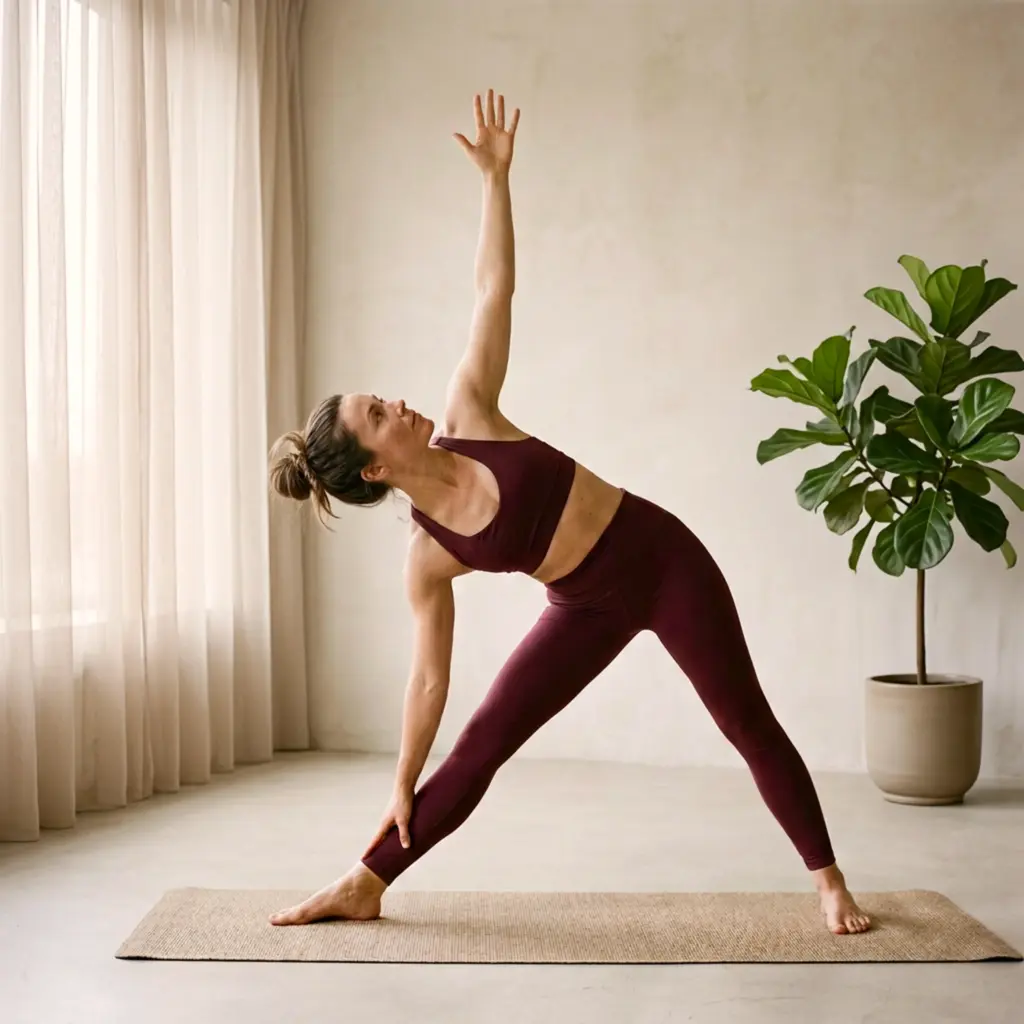
We ask new students to commit to a practice so short it feels almost silly: three rounds of breath, two standing poses, one forward fold. Do that four mornings a week for a month and the habit becomes structural. Length can come later — it always does, and usually on its own.
Give the practice a fixed home
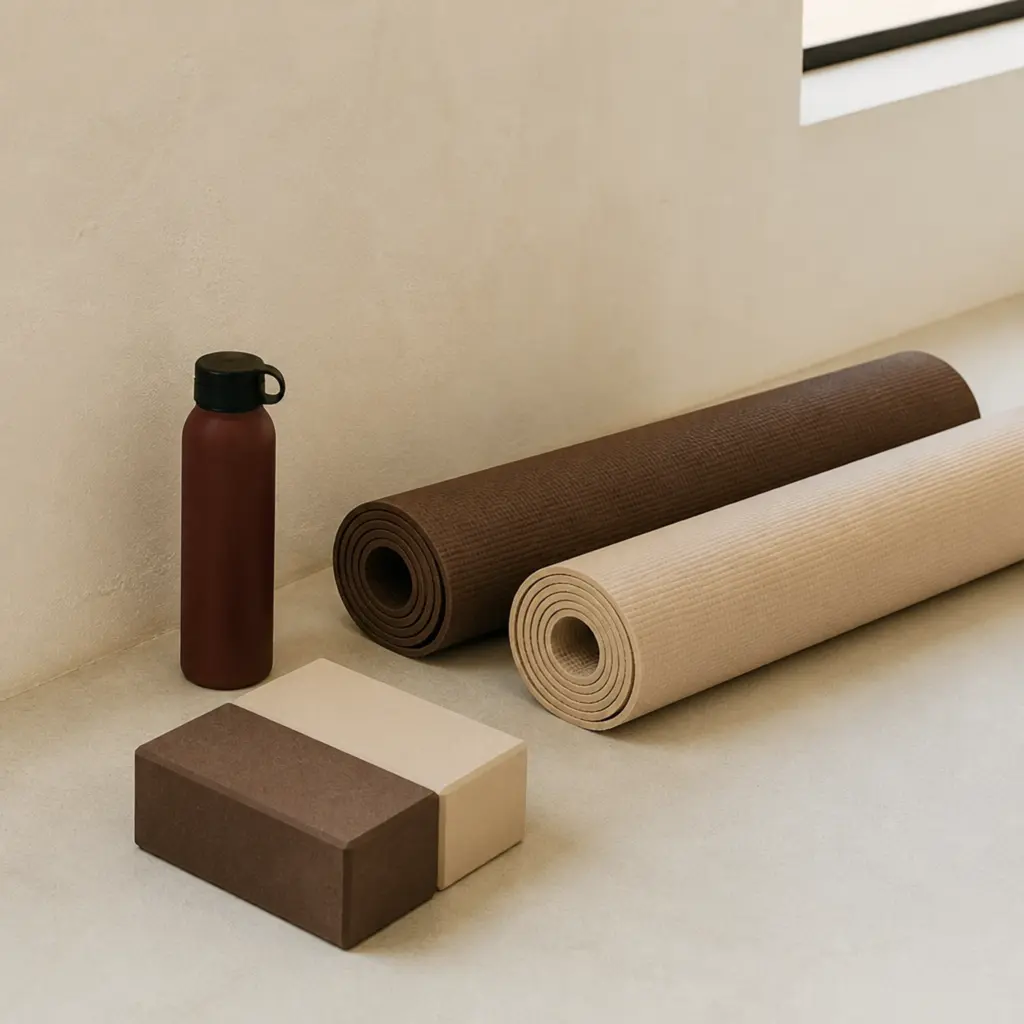
A mat that lives rolled up in a cupboard is a decision you have to make every single day. A mat that stays unrolled in the corner of a room is an invitation. The same goes for time: attach the practice to something that already happens — before your first coffee, after you close your laptop, once the house is quiet.
Choose a shape, not a sequence
Trying to remember a full class from the studio is a memory exercise, not a practice. Instead, hold on to a simple shape you can fill in differently each day:
- Arrive. Two or three minutes of sitting and breathing, long exhales.
- Warm. Cat–cow, a few gentle twists, whatever feels stiff.
- Work. Two or three poses you are curious about this week.
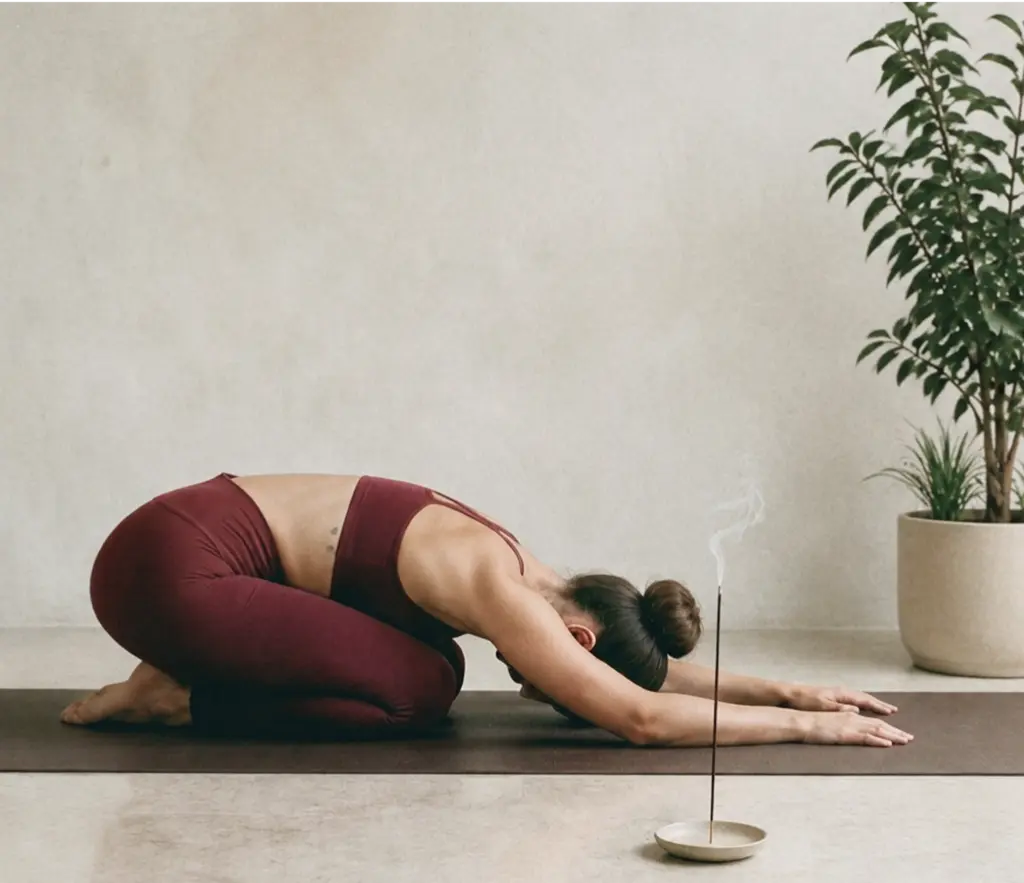
- Settle. A forward fold, a supported rest, one minute of stillness.
That shape works for ten minutes and for fifty. It removes the daily question of what to do, which is where most home practices quietly die.
Keep one class a week in the room
Practising alone is where the habit is built; practising in a room with a teacher is where the habit is corrected. Small errors in alignment compound quietly over months at home, and they are almost impossible to spot from the inside. One class a week is usually enough to keep the rest honest.
It also does something less technical: it reminds you that you are part of a practice much older and wider than your own living room. That matters more than most people expect on the mornings when motivation is thin.
Expect it to be boring sometimes
A lasting practice is not a series of breakthroughs. Most days are unremarkable — you unroll the mat, you breathe, you notice your hips are tight again, you roll it back up. The unremarkable days are the practice. The interesting ones are a by-product.
If you are building a home practice and want a second pair of eyes on it, bring your questions to class. Our teachers are happy to help you shape something that fits your week rather than fighting it.